Black History, Government

Edward W. Brooke
Edward W. Brooke’s election to the U.S. Senate in 1966 ended an 85-year absence of African-American Senators.
A Senator from Massachusetts; born in Washington, D.C., October 26, 1919; attended the public schools of Washington, D.C.; graduated from Howard University, Washington, D.C., in 1941; graduated, Boston University Law School 1948; captain, United States Army, infantry, with five years of active service in the European theater of operations; chairman of Finance Commission, city of Boston 1961-1962.
He was elected attorney general of the Commonwealth of Massachusetts in 1962; reelected in 1964; elected as a Republican to the United States Senate in 1966; reelected in 1972 and served from January 3, 1967, to January 3, 1979; unsuccessful candidate for reelection in 1978; first African American elected to the Senate by popular vote; lawyer; awarded the Presidential Medal of Freedom on June 23, 2004; is a resident of Miami, Fla.
Arts, Black History
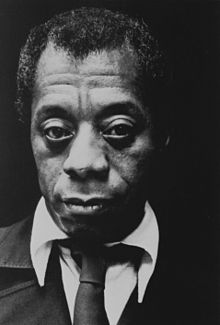
James Baldwin
Born: August 2, 1924 – Harlem, New York, U.S.
Died: December 1, 1987 (aged 63) – Saint-Paul de Vence, France
Occupation: Writer, Novelist, Poet, Playwright, Activist
Baldwin spent an impoverished boyhood in Harlem and at 14 became a preacher in the Fireside Pentecostal Church. His first two novels, Go Tell It on the Mountain (1953), reflecting his experience as a young preacher, and Giovanni’s Room (1956), which dealt with his homosexuality, were written while he lived in Paris. He returned to the United States in 1957 and participated in the civil-rights movement, later returning to France where he lived for the remainder of his life.
Another Country (1962), a bitter novel about sexual relations and racial tension, received critical acclaim, as did the publication of the perceptive essays in The Fire Next Time (1963). His eloquence and unsparing honesty made Baldwin one of the most influential authors of his time. (more…)
Black History, Business, Firsts, Other
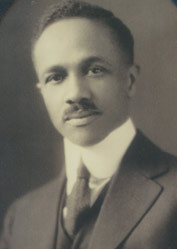
John W Cromwell
In 1921, John W. Cromwell, Jr., became the first African-American to earn the designation of CPA, some 25 years after the first CPA certificate was granted in the United States. Cromwell was a member of one of the leading African-American families in the country. His father was a teacher, political activist, attorney, and chief examiner for the U.S. Post Office. Cromwell’s older sister, Otelia, was the first African-American alumna of Smith College and went on to earn a Ph.D. in English at Yale. Cromwell was exceptional himself. He graduated from Dartmouth as the best student in science in the class of 1906. A year later he completed his master’s degree there.
The profession most open to African-Americans at the time was teaching. After finishing at Dartmouth, Cromwell returned home to Washington, D.C., and became a mathematics teacher at the Dunbar School, the most prestigious black high school in the country.
Fifteen years passed before John Cromwell became a CPA. He was not allowed to sit for the CPA exam in Washington, D.C., Virginia, or Maryland. In addition, all those places had experience requirements. The biggest barrier to African-Americans in becoming CPAs has always been the experience requirement: In order to become a CPA you have to work for a CPA, and for the first two-thirds of the last century, most firms would not hire African-Americans. (more…)
Black History, Military
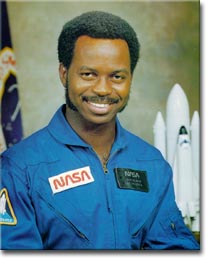
Ronald McNair
1950-1986 – On February 3, 1984, mission specialist Dr. Ronald McNair and his fellow crew members on space shuttle mission 41-B executed the first runway landing of the Challenger at Kennedy Space Center. McNair, a laser physicist, also played a key role in the mission’s other firsts: activating the Manned Maneuvering Unit; operating the Canadian Arm, which positioned crew members around the Challenger’s payload; and performing numerous mid-deck experiments.
In his “spare” time in space, McNair entertained the other four astronauts with a jazz concert on his saxophone�also a first in space. (more…)
Black History, Education
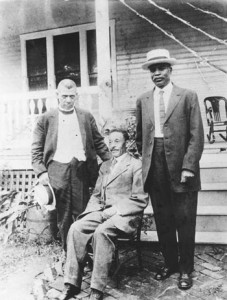
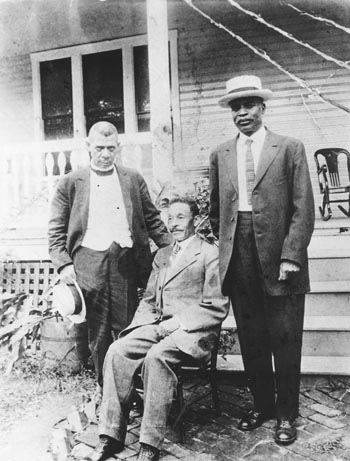
Booker T. Washington, Byrd Prillerman and Kelly Miller
If the student of American history would know what freedom has meant to the Negro race, let him study the life of a man like Byrd Prillerman, B.S., A.M., Litt.D., President Emeritus West Virginia Collegiate Institute and Superintendent of work among the Negroes of West Virginia S. S. Association. Having been born a slave on October 19, 1859 his life covers the whole period of the freedom of his race in America.
His rise from poverty and obscurity to a place of leadership and large usefulness as a citizen, not only makes a fascinating story, but it is in a way, typical of the progress of the race since Emancipation. Mr. Prillerman is a native of the Old Dominion, having been born in Franklin County, Va., the youngest of a family of seventeen children. His father, Franklin Prillerman, was a man of intelligence, energy, and initiative. He was a blacksmith and even before the Civil War had been sent into the Kanawha Valley to work at his trade. (more…)
Black History, Inventions
 Dr. Thomas C. Cannon Jr. lead a group of engineers that developed the Tactical Optical Fiber Connector (TOFC). The TOFC was designed to terminate optical fiber cables used in military combat. Optical fiber cables are preferable to conventional copper cables because they are immune to electrical interference, lightweight, have a high signal carrying capacity, and do not radiate any electromagnetic energy which might be detected by the enemy.
TOFC was the first fiber optic connector actually deployed under battlefied conditions, and saw action in the Gulf War where it was used to transmit firing signals to the Patriot missile.