Black History, Military

Crispus Attucks
A runaway slave who believed fiercely in freedom commanded the people of Boston “do not be afraid,” as he struck out against the redcoats and became the first hero to die in an attack that spurred the American Revolution.
On the night of March 5, 1770, five citizens of Boston died when eight British soldiers fired on a large and unruly crowd that was menacing them. Boston’s patriots, led by Sam Adams, immediately labeled the affray the Boston Massacre and hailed its victims as martyrs for liberty. The troops had been sent to Boston in late 1768 to support the civil authorities and were themselves subject to the jurisdiction of the local courts. (more…)
Black History, Slavery
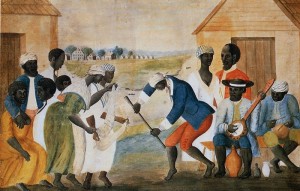 In 1654, John Casor became the first legal slave in America. Anthony Johnson, previously an African indentured slave, claimed John Casor as his slave. The Northampton County rule against Casor, and declared him propter for life by Anthony Johnson. Since Africans were not English, they were not covered by the English Common Law.
The First Black Slave was brought by the Dutch to the colony of Jamestown, 1619.

Black History, Education
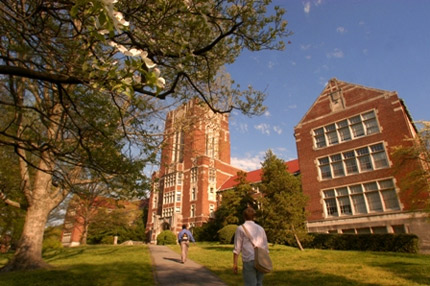
University of Tennessee
The most significant event in the college’s history, however, was not military but political: the passage of the Morrill Act by Congress in 1862 providing for the granting of federally owned lands to states that would establish public agricultural and mechanical colleges.
East Tennessee University was designated in 1869 by the state legislature as the land-grant institution of the state and thereby the recipient of the proceeds of the properties allocated by law to Tennessee. The value of the real estate involved was almost $400,000, providing a boon to the college’s fortunes. (more…)
Black History, Education
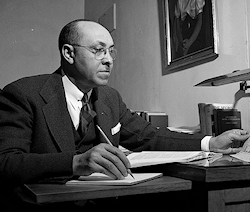
Ambrose Caliver
A major contributor to the field of adult education, Dr. Ambrose Caliver devoted much of his professional life to adult literacy. While this area continued to occupy his interest and best efforts, he also took an active role in such matters as displaced persons, human rights, public affairs, aging, and professional development of adult educators.
Born in 1894, Caliver began his career as a high school principal in Tennessee. Before his death in 1962 he served in the following capacities: faculty member at Fisk University; specialist in the education of Negroes, United States Office of Education; organizer of the National Advisory Committee on the Education on Negroes. (more…)
Black History, Education, Slavery
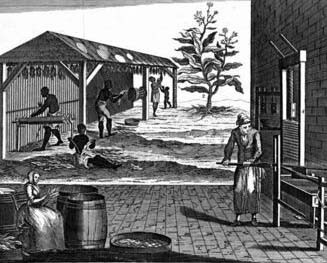 Soon after Union troops had captured and occupied the southern city of Natchez, Mississippi, in the summer of 1863, northern missionaries set about establishing the region’s first schools for freedpeople. But they were surprised to learn that at least one school already existed, and it had been in operation for many years.
Even more astounding, the students at this school were slaves and so was their teacher, Lily Ann Granderson. (Other sources identify her as Milla Granson and Lila Grandison.) Although a small number of slaves learned to read and write in the antebellum South, schools for slaves and slave teachers were extraordinarily uncommon. (more…)
Black History, Sports
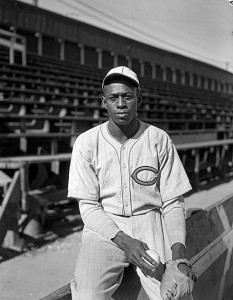
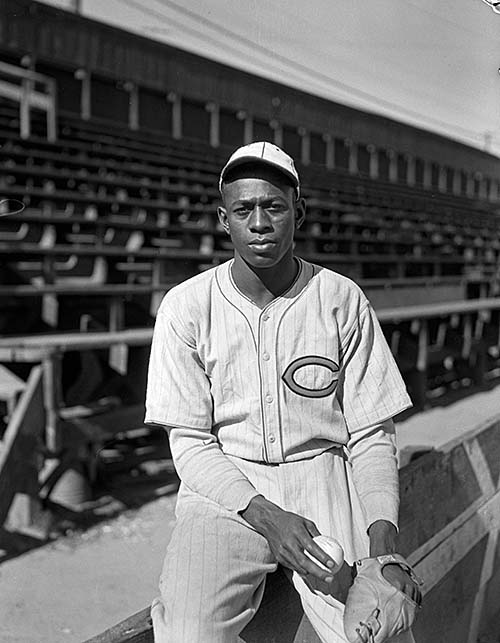
Leroy ‘Satchel’ Paige
Regarded as the nearest thing to a legend that ever came out of the Negro Leagues, this tall, lanky right-hander parlayed a pea-sized fastball, nimble wit, and a colorful personality into a household name that is recognized by people who know little about baseball itself and even less about the players who performed in the Jim Crow era of organized baseball. His name has become synonymous with the barnstorming exhibitions played between traveling black teams and their white counterparts.
A mixture of fact and embellishment, Satchel’s stories are legion and form a rich array of often-repeated folklore. On many occasions he would pull in the outfielders to sit behind the mound while he proceeded to strike out the side with the tying run on base. Once he intentionally walked Howard Easterling and Buck Leonard to load the bases so he could pitch to Josh Gibson, the most dangerous hitter in black baseball, and then struck him out. He was advertised as guaranteed to strike out the first nine batters he faced in exhibition games, and he almost invariably fulfilled his billing.
Satchel frequently warmed up by throwing twenty straight pitches across a chewing gum wrapper that was being used for home plate. His “small” fastball was described by some hitters as looking like a half dollar. Others said that he wound up with a pumpkin and threw a pea. But Biz Mackey had the best story about how small his fastball looked. He said that once Satchel threw the ball so hard that the ball disappeared before it reached the catcher’s mitt. The stories are endless. But the facts are also impressive. (more…)