Medicine
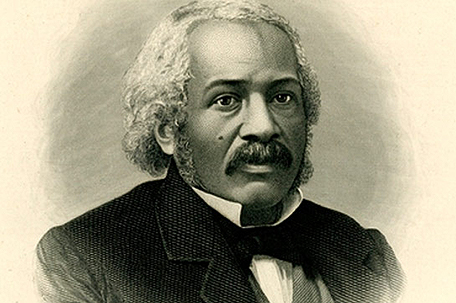
James Derham was born into slavery in Philadelphia in 1762. As a child, Derham was transferred to Dr. John Kearsley Jr., under whom Derham studied medicine. From Kearsley, Derham learned about compound medicine focusing on curing throat illnesses, as well as patient bedside manner. Upon Dr. Kearsley’s death, Derham, then fifteen years old, was moved between several different enslavers before finally settling with Dr. George West, a surgeon for a British regiment during the American Revolutionary War. He was eventually transferred again, this time to New Orleans doctor Robert Dove.
As an assistant at Dove’s practice, Derham and Dove became friends, and Dove finally granted Derham his freedom. With some financial assistance from Dove, Derham opened a medical practice in New Orleans. By 1789, his practice is reported to have made about $3,000 (~$76,723 in 2023) annually. In 1788, Derham and Dr. Benjamin Rush met each other in Philadelphia, and corresponded with one another for twelve years. Derham’s final letter to Rush in 1802 is the last record of his existence. It is believed that after the Spanish authorities restricted Derham to treating throat diseases in 1801, Derham left his practice in New Orleans.
Education
Marguerite Thomas Williams was born in Washington, D.C. on December 24, 1895. She received her Bachelor of Arts degreee from Howard University in 1923 and a Master of Arts degree from Columbia University in 1930. Marguerite Thomas Williams earned a Ph.D. in Geology from Catholic University of America in 1942, as the first African American (male or female) to earn a doctorate in geology in the United States.
Dr. Williams was employed as a teacher in Miner Teachers College (now part of the University of the District of Columbia) from 1923-29. Dr. Williams served as Chairman of the Division of Geography (1923-33) and served from Assistant Professor to full Professor in the Department of Social Sciences, Miner Teachers College, from 1943 to 1955. Marguerite Williams also served as an Instructor for the Evening School at Howard University, 1944.
Events
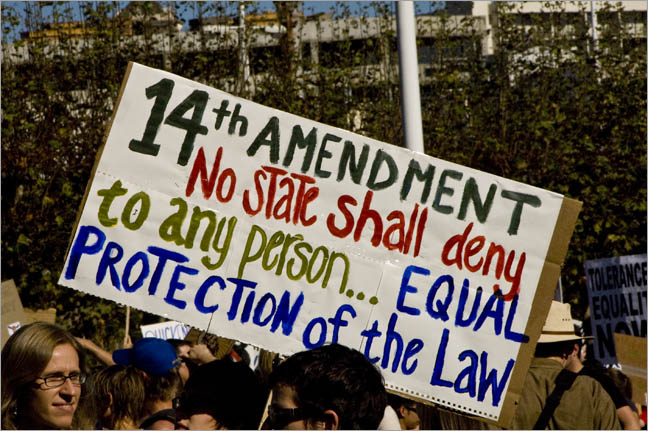
Section. 1. All persons born or naturalized in the United States and subject to the jurisdiction thereof, are citizens of the United States and of the State wherein they reside. No State shall make or enforce any law which shall abridge the privileges or immunities of citizens of the United States; nor shall any State deprive any person of life, liberty, or property, without due process of law; nor deny to any person within its jurisdiction the equal protection of the laws.
Section. 2. Representatives shall be apportioned among the several States according to their respective numbers, counting the whole number of persons in each State, excluding Indians not taxed. But when the right to vote at any election for the choice of electors for President and Vice President of the United States, Representatives in Congress, the Executive and Judicial officers of a State, or the members of the Legislature thereof, is denied to any of the male inhabitants of such State, being twenty-one years of age, and citizens of the United States, or in any way abridged, except for participation in rebellion, or other crime, the basis of representation therein shall be reduced in the proportion which the number of such male citizens shall bear to the whole number of male citizens twenty-one years of age in such State.
Section. 3. No person shall be a Senator or Representative in Congress, or elector of President and Vice President, or hold any office, civil or military, under the United States, or under any State, who, having previously taken an oath, as a member of Congress, or as an officer of the United States, or as a member of any State legislature, or as an executive or judicial officer of any State, to support the Constitution of the United States, shall have engaged in insurrection or rebellion against the same, or given aid or comfort to the enemies thereof. But Congress may by a vote of two-thirds of each House, remove such disability.
Section. 4. The validity of the public debt of the United States, authorized by law, including debts incurred for payment of pensions and bounties for services in suppressing insurrection or rebellion, shall not be questioned. But neither the United States nor any State shall assume or pay any debt or obligation incurred in aid of insurrection or rebellion against the United States, or any claim for the loss or emancipation of any slave; but all such debts, obligations and claims shall be held illegal and void.
Section. 5. The Congress shall have power to enforce, by appropriate legislation, the provisions of this article.
Education
At Blackwell became the seventh African American to earn a Ph.D. in mathematics and is considered by many to be the greatest black mathematician. He in the first African American to be named to the National Academy of Science and in 1979 won the von Neumann Theory Prize.
Abolition
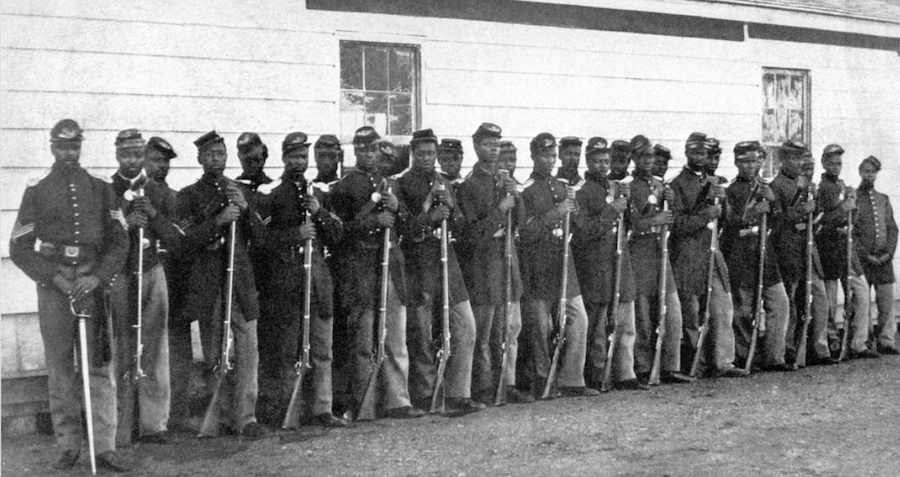
The 54th Regiment Massachusetts Infantry was a volunteer Union regiment organized in the American Civil War. Its members became known for their bravery and fierce fighting against Confederate forces. It was the second all-Black Union regiment to fight in the war, after the 1st Kansas Colored Volunteer Infantry Regiment.
From the beginning of the Civil War, President Abraham Lincoln argued that the Union forces were not fighting to end slavery but to prevent the disintegration of the United States. For abolitionists, however, ending slavery was the reason for the war, and they argued that Black people should be able to join the fight for their freedom. However, African Americans were not allowed to serve as soldiers in the Union Army until January 1, 1863. On that day, the Emancipation Proclamation decreed that “such persons [that is, African American men] of suitable condition, will be received into the armed services of the United States.”
Early in February 1863, the abolitionist Governor John A. Andrew of Massachusetts issued the Civil War’s first call for Black soldiers. Massachusetts did not have many African American residents, but by the time 54th Infantry regiment headed off to training camp two weeks later more than 1,000 men had volunteered. Many came from other states, such as New York, Indiana and Ohio; some even came from Canada. One-quarter of the volunteers came from slave states and the Caribbean. Fathers and sons (some as young as 16) enlisted together. The most famous enlistees were Charles and Lewis Douglass, two sons of the abolitionist Frederick Douglass.
Read more of this article on the History Channel.
