The Arts
b. New York City. Mitchell studied in New York City and appeared on Broadway and with various companies at home and abroad. He joined the New York City Ballet in 1956, becoming a soloist in 1959. The first black principal dancer of a major company in history, he remained with the company for 20 years. His performance as Puck in A Midsummer Night’s Dream (1964) was especially acclaimed. He also performed with distinction in Western Symphony, Agon, Afternoon of a Faun, and Ebony Concerto. In 1968, Mitchell founded a ballet school in Harlem, New York City, in order to provide classical academic training to black students. By 1970 under his direction the school developed into the Dance Theatre of Harlem, the first black classical ballet company. His works include Rhythmetron (1968) and Ode to Otis (1969).
Slavery
(1833-70), promoter, with its state and local auxiliaries, of the cause of immediate abolition of slavery in the United States.
As the main activist arm of the Abolition Movement (see abolitionism), the society was founded in 1833 under the leadership of William Lloyd Garrison. By 1840 its auxiliary societies numbered 2,000, with a total membership ranging from 150,000 to 200,000. The societies sponsored meetings, adopted resolutions, signed antislavery petitions to be sent to Congress, published journals and enlisted subscriptions, printed and distributed propaganda in vast quantities, and sent out agents and lecturers (70 in 1836 alone) to carry the impassioned antislavery message to Northern audiences.
Participants in the societies were drawn mainly from religious circles (e.g., Theodore Dwight Weld) and philanthropic backgrounds (e.g., businessmen Arthur and Lewis Tappan and lawyer Wendell Phillips), as well as from the free black community, with six blacks serving on the first Board of Managers. The society’s public meetings were most effective when featuring the eloquent testimony of former slaves like Frederick Douglass or William Wells Brown. The society’s antislavery activities frequently met with violent public opposition, with mobs invading meetings, attacking speakers, and burning presses.
In 1839 the national organization split over basic differences of approach: Garrison and his followers were more radical than other members; they denounced the U.S. Constitution as supportive of slavery and insisted on sharing organizational responsibility with women. The less radical wing, led by the Tappan brothers, formed the American and Foreign Anti-Slavery Society, which advocated moral suasion and political action and led directly to the birth of the Liberty Party (q.v.) in 1840. Because of this cleavage in national leadership, the bulk of the activity in the 1840s and ’50s was carried on by state and local societies. The antislavery issue entered the mainstream of American politics through the Free-Soil Party (1848-54) and subsequently the Republican Party (founded in 1854). The American Anti-Slavery Society was formally dissolved in 1870, after the Civil War and Emancipation.
The Arts
1917 ? 2000
b. Atlantic City, N.J. In Lawrence’s work social themes, often detailing the African-American experience, are expressed in angular, colorful, and richly decorative effects. He has executed many cycles of paintings, including the Migration, (completed 1941, Museum of Modern Art and Phillips Collection, Washington, D.C.), Coast Guard, and Builders series. His War series and Tombstones are in the Whitney Museum of American Art, New York City. Lawrence is also known for his vivid prints and has taught at several major art schools in New York City.
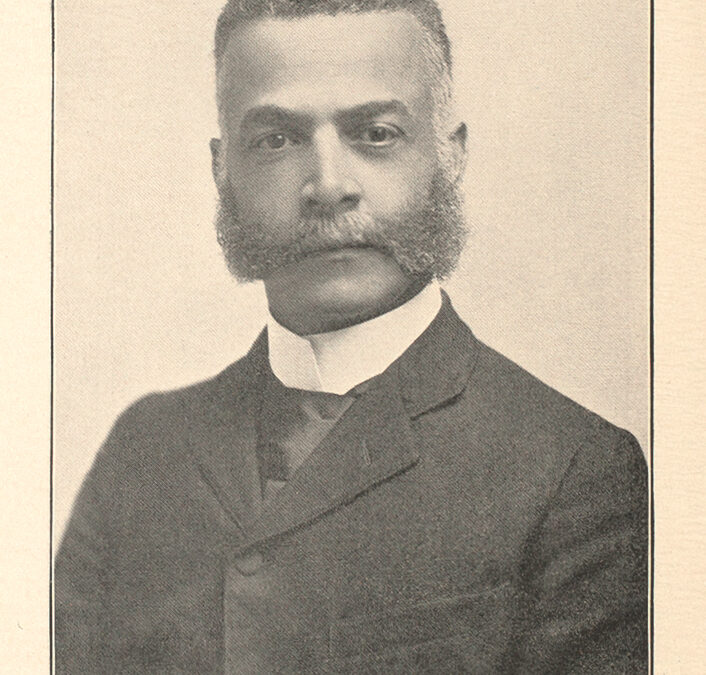
Abolition
Archibald Henry Grimké (August 17, 1849 – February 25, 1930) was an African-American lawyer, intellectual, journalist, diplomat and community leader in the 19th and early 20th centuries. He graduated from freedmen’s schools, Lincoln University in Pennsylvania, and Harvard Law School, and served as American Consul to the Dominican Republic from 1894 to 1898. He was an activist for the rights of Black Americans, working in Boston and Washington, D.C. He was a national vice-president of the National Association for the Advancement of Colored People (NAACP), as well as president of its Washington, D.C. chapter.
Grimké was born into slavery on his father’s plantation near Charleston, South Carolina, in 1849.[2] He was the eldest of three sons of Henry W. Grimké, a widower, and Nancy Weston, a very intelligent enslaved woman, crippled in one arm, who had been born into slavery as the daughter of an enslaved African or African-American woman; her father is unknown.[3]: 238 Henry acknowledged his sons, although he neither freed them nor told the rest of his family of their existence. Archibald’s brothers were Francis and John. Henry was a member of a prominent, sizeable family of enslavers in Charleston. His father and relatives were planters active in political and social circles.
Read more of this article on Wikipedia.
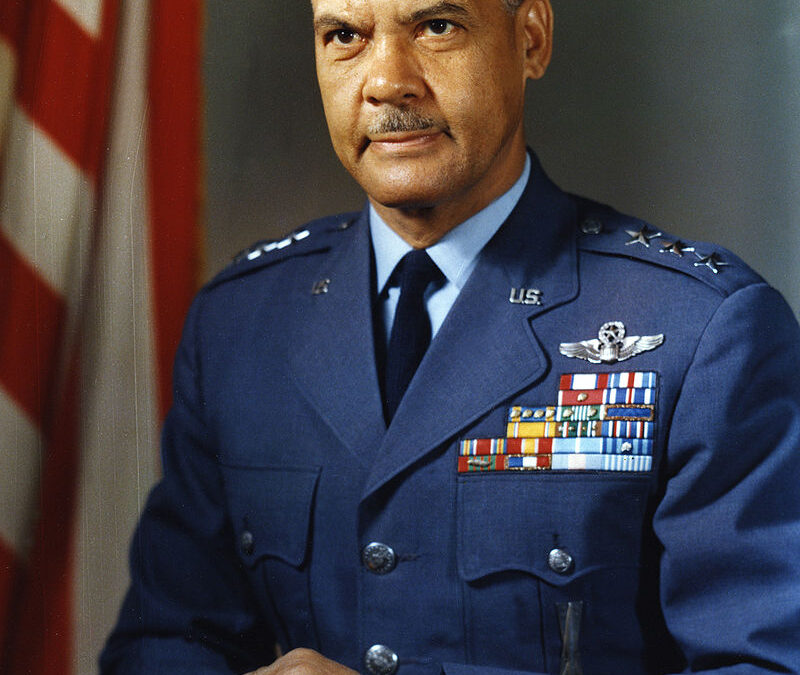
Military
1912?2002
b. Washington, D.C.; son of Benjamin Oliver Davis. After studying at Western Reserve and Chicago universities, he attended West Point, graduating in 1936. At the academy, Davis was the only African American in a white student body and was ostracized by the majority of the cadets, who would speak to him only in the line of duty. Following graduation he served as an infantry officer, entered the U.S. air force, and completed his flight training in 1942.
During World War II he distinguished himself as a combat pilot, leading the Tuskegee Airmen. In 1954, Davis became the first African-American general in the U.S. air force; from 1965 to 1970 he served as lieutenant general. In 1971 he became an assistant secretary for the department of transportation, leaving the department in 1975.
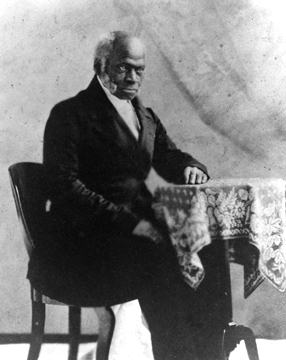
Slavery
Pierre Toussaint (June 27, 1766 – June 30, 1853) was a formerly enslaved Haitian-American hairdresser and philanthropist, brought to New York City by his enslavers in 1787. He was declared Venerable by Pope John Paul II in 1996.
Freed in 1807 after the death of his mistress, Pierre took the surname of “Toussaint” in honor of Toussaint Louverture, a leader of the Haitian Revolution.] Toussaint also became a successful barber and used his wealth for various philanthropic causes. He also helped finance the construction of St. Patrick’s Old Cathedral.
Credited as the de facto founder of Catholic Charities New York, Toussaint is the first and only layman to be buried in the crypt below the main altar of the current St. Patrick’s Cathedral on Fifth Avenue, generally reserved for bishops of the Roman Catholic Archdiocese of New York
