Black History, Science
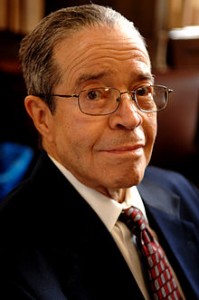
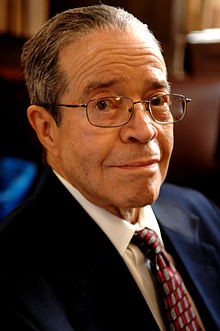
J. Ernest Wilkins Jr
Jesse Ernest Wilkins, Jr. (November 27, 1923 – May 1, 2011) was an African American nuclear scientist and mathematician, who gained first fame on entering the University of Chicago at age 13, becoming its youngest ever student. His intelligence led to him being referred to as a “negro genius” in the media.
As part of a widely varied and notable career, Wilkins contributed to the Manhattan Project during the Second World War. He also gained fame working in and conducting nuclear physics research in both academia and industry. He wrote numerous scientific papers, served in various important posts, earned several significant awards and helped recruit minority students into the sciences.
During his studies and various careers he was not untouched by the prevalent racism that existed for much of his life.
Black History, Inventions, Science
 During his tenure at the Cities Service Oil Co. in the late ’60s, Ernest J. Jamieson patented four inventions on the improvement of current gasoline compositions. One invention improved hydrocarbon fuel compositions for use in internal combustion engines by adding a detergent that prevents icing and corrosion.
Another invention improved a hydrocarbon fuel composition by adding a X hydrocarbylacid phosphate salt that reduced icing in the carburetor and improved water tolerance, thus reducing rust and hydrocarbon content in the exhaust.
Black History, Education, Firsts, Science
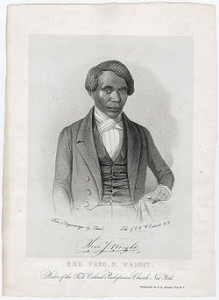
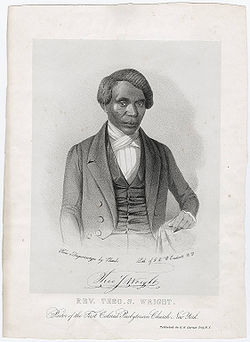
Theodore S. Wright
Theodore S. Wright (1797-1847) was an African-American abolitionist and minister who was active in New York City, where he led the First Colored Presbyterian Church as its second pastor. He was the first African American to attend Princeton Theological Seminary (and any United States theological seminary), from which he graduated in 1829. In 1833 he was a founding member of the American Anti-Slavery Society, and served on its executive committee until 1840.
Theodore Sedgwick Wright was born about 1797 to free parents. He is believed to have moved into New York City with his family, where he attended the African Free School.[1] With the aid of Governor DeWitt Clinton and Arthur Tappan of the New York Manumission Society, and men from Princeton Theological Seminary, Wright was aided in his studies at the graduate seminary. In 1829 he was the first African American to graduate from there, and the first to complete theological studies at a seminary in the United States.
Before 1833, Wright was called as the second minister of New York’s First Colored Presbyterian Church and served there the rest of his life. (It was later known as Shiloh Presbyterian Church and is now St. James Presbyterian Church in Harlem.) He followed the founder, Samuel Cornish. (more…)
Science
Earning his Ph.D. in 1918, he became the second African American to hold a doctorate in Physics, and in 1919 co- authored a signal work that opened an entirely new field of research – the study of molecular structure through the use of infra-red spectroscopy

Science
1888 – 1958
A 1912 recipient of a civil engineering degree from Iowa State University, Archibald ?Archie? Alexander joined the Marsh Engineering Company where he designed the Tidal Basin bridge in Washington, D.C. After studying bridge design in London, he and George Higbee formed a general contracting business that focused on bridge design. Alexander’s designs include Washington, D.C.’s Whitehurst Freeway, the heating plant and power station at the University of Iowa, and an airfield in Tuskegee, Alabama. Alexander went on to become the first Republican territorial governor of the U.S. Virgin Islands.

Science
Born 1925
Emmett W. Chappelle earned a B.S. degree from the University of California in 1950, and from 1950 to 1953 he served as an instructor of biochemistry at Meharry Medical College in Nashville, Tennessee. Chappelle earned an M.S. degree from the University of Washington in 1954. From 1955 to 1958, he was a research associate at Stanford University, and from 1958 to 1963 he became scientist and biochemist for the Research Institute of Advanced Studies at Stanford University.
Between 1963 and 1966 Chappelle served as a biochemist for Hazelton Laboratories, the as an exobiologist and astrochemist. He went to work as a biochemist for the division of Research Center for Space Exploration before joining the National Aeronautics and Space Administration (NASA) as a remote sensing scientist in 1977. Among Chappelle’s discoveries is a method (developed with Grace Picciolo) of instantly detecting bacteria in water, which led to improved diagnoses of urinary tract infections.