Black History, Inventions

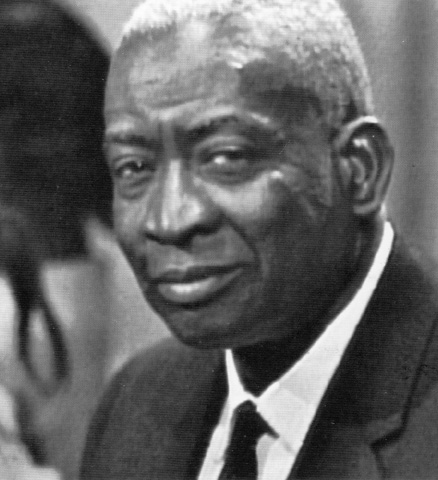
Otis Boykin
1920-1982 – An electronic scientist and inventor, Otis Boykin devised the control unit in artificial heart stimulators, invented a variable resistor device used in many guided missiles, small components such as thick-film resistors used in IBM computers, and many other devices including a burgular-proof cash register and a chemical air filter.
Starting as an assistant in a laboratory testing airplane automatic controls, Boykin was soon developing a type of resistor now used in many computers, radios, television sets and other electronically controlled devices.
Many products made from his discoveries are manufactured in Paris and throughout Western Europe. One of his products was approved for use in military hardware for the Common Market.
Black History, Inventions
 Michael Croslin held more than 40 patents for medical inventions and established his own company, Medtek Corporation. His inventions include a computerized, digital blood pressure measurement device; a refractometer (used to measure the index of refraction of a substance) that measures levels of urinary sugar and protein; and a pump that measures and dispenses intravenous medications.
Born in 1933 in the U.S. Virgin Islands in Frederiksted, St. Croix, Michael Croslin was abandoned as a baby. A family named Britto gave him a home as a child and named him Miguel (later Anglicized as “Michael”). By the time he was 12, he fled the islands for the mainland United States. He worked odd jobs, living in Georgia for a time, and he obtained a brief education at a Jesuit school. He eventually wound up in Wisconsin, where he was adopted by the Croslin family. He, in turn, adopted their name.
(more…)
Black History, Inventions
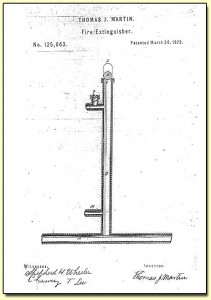 Thomas J Martin, a Black inventor, was awarded a patent for the Fire Extinguisher on March 26, 1872. His invention is listed in the U. S. Patent Office in Washington, DC under patent number115,603.
The patent refers to pipe and valves and not the wall hanging type of extinguisher that is normally displayed.
Black History, The Arts
Thomas Andrew Dorsey
“the father of black gospel music”
Thomas Andrew Dorsey born in Villa Rica, Georgia. He is known as “the father of black gospel music� and was at one time so closely associated with the field that songs written in the new style were sometimes known as “dorseys.� Earlier in his life he was a leading blues pianist known as Georgia Tom.
As formulated by Dorsey, gospel music combines Christian praise with the rhythms of jazz and the blues. His conception also deviates from what had been, to that time, standard hymnal practice by referring explicitly to the self, and the self’s relation to faith and God, rather than the individual subsumed into the group via belief.
Dorsey was the music director at Pilgrim Baptist Church in Chicago from 1932 until the late 1970s. His best known composition, “Take My Hand, Precious Lord�, was performed by Mahalia Jackson and was a favorite of the Rev. Martin Luther King Jr., and “Peace in the Valley�, which was a hit for Red Foley in 1951 and has been performed by dozens of other artists, including Queen of Gospel Albertina Walker, Elvis Presley and Johnny Cash.
(more…)
Civil Rights
The Civil Rights Act of 1964 (Pub.L. 88–352, 78 Stat. 241, enacted July 2, 1964) is a landmark civil rights and labor law in the United States that outlaws discrimination based on race, color, religion, sex, or national origin. It prohibits unequal application of voter registration requirements, and racial segregation in schools, employment, and public accommodations.
Initially, powers given to enforce the act were weak, but these were supplemented during later years. Congress asserted its authority to legislate under several different parts of the United States Constitution, principally its power to regulate interstate commerce under Article One (section 8), its duty to guarantee all citizens equal protection of the laws under the Fourteenth Amendment, and its duty to protect voting rights under the Fifteenth Amendment.
The legislation had been proposed by President John F. Kennedy in June 1963, but opposed by filibuster in the Senate. After Kennedy was assassinated on November 22, 1963, President Lyndon B. Johnson pushed the bill forward. The United States House of Representatives passed the bill on February 10, 1964, and after a 54-day filibuster, passed the United States Senate on June 19, 1964. The Act was signed into law by President Johnson at the White House on July 2, 1964 after the House of Representatives agreed to a subsequent Senate amendment to the bill passed the same day Johnson signed the bill into law.
The final vote in the House of Representatives was 290–130 with 138–34 (80%) in the House Republican Conference and 152–96 (61%) in the House Democratic Caucus with 11 members voting present or abstaining, while in the Senate the final vote was 73–27 with 27–6 (82%) in the Senate Republican Conference and 46–21 (69%) in the Senate Democratic Caucus.
– Wikipedia