Black History, Education, Firsts
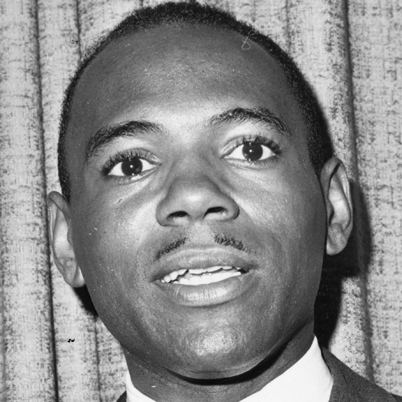
James H. Meredith
James H. Meredith, who in 1962 became the first African American to attend the University of Mississippi, is shot by a sniper shortly after beginning a lone civil rights march through the South. Known as the “March Against Fear,” Meredith had been walking from Memphis, Tennessee, to Jackson, Mississippi, in an attempt to encourage voter registration by African Americans in the South.
A former serviceman in the U.S. Air Force, Meredith applied and was accepted to the University of Mississippi in 1962, but his admission was revoked when the registrar learned of his race. A federal court ordered “Ole Miss” to admit him, but when he tried to register on September 20, 1962, he found the entrance to the office blocked by Mississippi Governor Ross Barnett. On September 28, the governor was found guilty of civil contempt and was ordered to cease his interference with desegregation at the university or face arrest and a fine of $10,000 a day. Two days later, Meredith was escorted onto the Ole Miss campus by U.S. Marshals, setting off riots that resulted in the deaths of two students. He returned the next day and began classes. In 1963, Meredith, who was a transfer student from all-black Jackson State College, graduated with a degree in political science. (more…)
Black History, Education
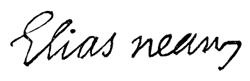 French colonish Elias Neau opened a school for enslaved African Americans in New York City. It was a catechizing school. As early as 1703 he called athe attention of the Society to the great number, of slaves in New York ” who were without God in the world, and of whose souls there was no manner of care taken” and proposed the appointement of acatechist to undertake their instruction. Neau’s task was not an easy one. At first he went from house to house, but afterwards arranged for some of the slaves to attend him.
In that colony, the instruction of the Negro and Indian slaves to prepare them for conversion, baptism, and communion was a primary charge oft repeated to every missionary and schoolmaster of the Society. In addition to the general efforts put forth in the colonies, there was in New York a special provision for the employment of sixteen clergymen and thirteen lay teachers mainly for the evangelization of the slaves and the free Indians. For the Negro slaves a catechizing school was opened in New York City in 1704 under the charge of Elias Neau. (more…)
Black History, Education, Firsts, Other
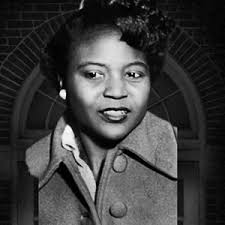
Autherine Lucy Foster
Autherine Juanita Lucy was the first black student to attend the University of Alabama, in 1956. She was born on October 5, 1929 in Shiloh, Alabama and graduated from Linden Academy in 1947. She went on to attend Selma University in Selma, and the all-black Miles College in Fairfield – where she graduated with a BA in English in 1952.
Later in 1952, at the encouragement of and along with a Miles classmate, Pollie Ann Myers, she decided to attend the University of Alabama as a graduate student but, knowing that admission would be difficult due to the University’s admission policies, she and Myers approached the National Association for the Advancement of Colored People (NAACP) for help. Thurgood Marshall, Constance Baker Motley, and Arthur Shores were assigned to be their attorneys. While they started preparing her case, she worked as a secretary. Court action began in July 1953. (more…)
Black History, Education
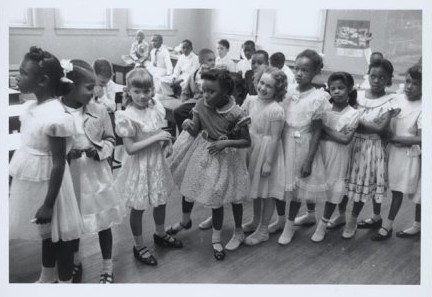
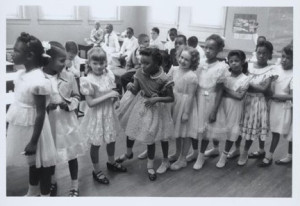 Desegregation of the Baltimore City Public School System happened in 1956 after the United States Supreme Court ruled, in the case of Brown v. Board of Education, that segregation in schools went against constitutional law. Desegregation of American schools was a pivotal part of the civil rights movement, as no progress in the civil rights movement would have been made if America’s schools remained segregated.
Following the Supreme Court ruling cities all across America began to desegregate. Baltimore, the largest city in the state of Maryland, desegregated all its public schools following the Supreme Court’s decision, and the events that followed the desegregation in Baltimore, were both interesting and important to the civil rights movement across America. Recent scholarship has begun to revisit the importance of the desegregation of Baltimore’s public schools and identify it as an important precursor to the Greensboro sit-ins. (more…)
Black History, Education
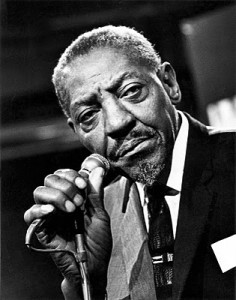
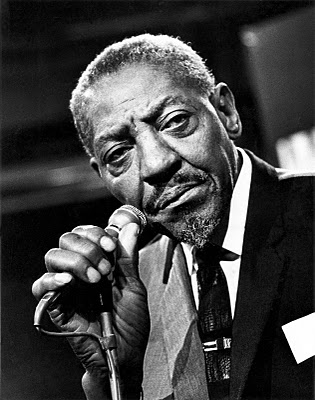
Sonny Boy Williamson II
Alex Miller (December 5, 1912 – May 25, 1965), known professionally as Sonny Boy Williamson, was an American blues harmonica player, singer and songwriter, from Mississippi. He is acknowledged as one of the most charismatic and influential blues musicians, with considerable prowess on the harmonica and creative songwriting skills. He recorded successfully in the 1950s and 1960s, and had a direct influence on later blues and rock performers.
His head stone found in or near Tutwiler, Mississippi, lists his name as Aleck Miller, his birth date as March 11, 1908 and his date of death as June 23, 1965.
Black History, Education
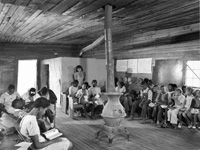
Peabody Education Fund
Founded of necessity due to damage caused largely by the American Civil War, the Peabody Education Fund was established by George Peabody in 1867 for the purpose of promoting “intellectual, moral, and industrial education in the most destitute portion of the Southern States.” The gift of foundation consisted of securities to the value of $2,100,000, of which $1,100,000 were in Mississippi State bonds, afterward repudiated. In 1869 an additional $1,000,000 was given by Mr. Peabody, with $384,000 of Florida funds, also repudiated later. The main purpose of the fund was to aid elementary education by strengthening existing schools. Because it was restricted from founding new schools, it did not benefit freedmen in the South, as there were no established schools for blacks.
“The fund introduced a new type of benefaction in that it was left without restriction in the hands of the trustees to administer. Power to close the trust after thirty years was provided on condition that two-thirds of the fund be distributed to educational institutions in the Southern states.” (more…)