Black History, Firsts, Religion
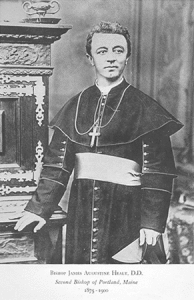
Rev. James A. Healy, D.D.
Bishop Bacon’s successor, James Augustine Healy, was appointed February 12, 1875, and consecrated as Bishop of Portland at the Cathedral of the Immaculate Conception (see Cathedral) on June 2, 1875.
James Augustine Healy became the first black bishop ordained in the United States. He was the son of an Irish immigrant, Michael Healy, who became a prosperous plantation-owner in Georgia, and a mulatto woman who was actually a slave.
James was educated in northern schools and later attended the newly established Holy Cross College. There he made his decision to enter the priesthood. He furthered his studies in Montreal and Paris where he was ordained in 1854 at the Cathedral of Notre Dame.
After ordination Father Healy was assigned to Bishop John Fitzpatrick’s Boston Diocese. He remained there serving first at the House of the Angel Guardian, then as Chancellor of the Diocese and finally as pastor of St. James Church. When his appointment came as the second Bishop of Portland, he was forty-five years old. (more…)
Black History, Medicine, Politics
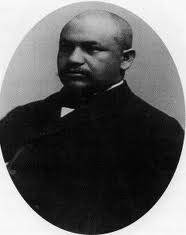
- Dr. Matthew Ricketts
Dr. Matthew Oliver Ricketts was the political leader of Omaha’s African Americans at the turn of the 20th century. Ricketts was born to an enslaved couple near New Castle, Kentucky in 1858. He later received a degree from Lincoln Institute at Jefferson City, Missouri, and three years later moved to Omaha.
When he arrived in Omaha in 1880, despite scarce resources, he was admitted to Omaha Medical College, where he worked as a janitor to pay his tuition. Elected to the state legislature for the sessions of 1892 and 1894, he became the first Nebraskan of African descent to sit in that body
Black History, Education, Firsts, Other
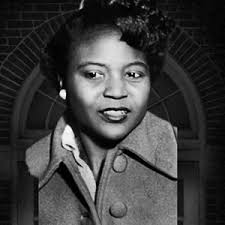
Autherine Lucy Foster
Autherine Juanita Lucy was the first black student to attend the University of Alabama, in 1956. She was born on October 5, 1929 in Shiloh, Alabama and graduated from Linden Academy in 1947. She went on to attend Selma University in Selma, and the all-black Miles College in Fairfield – where she graduated with a BA in English in 1952.
Later in 1952, at the encouragement of and along with a Miles classmate, Pollie Ann Myers, she decided to attend the University of Alabama as a graduate student but, knowing that admission would be difficult due to the University’s admission policies, she and Myers approached the National Association for the Advancement of Colored People (NAACP) for help. Thurgood Marshall, Constance Baker Motley, and Arthur Shores were assigned to be their attorneys. While they started preparing her case, she worked as a secretary. Court action began in July 1953. (more…)
Black History, Civil Rights
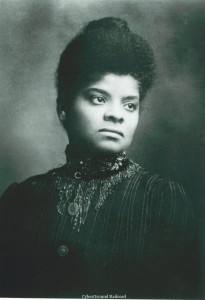
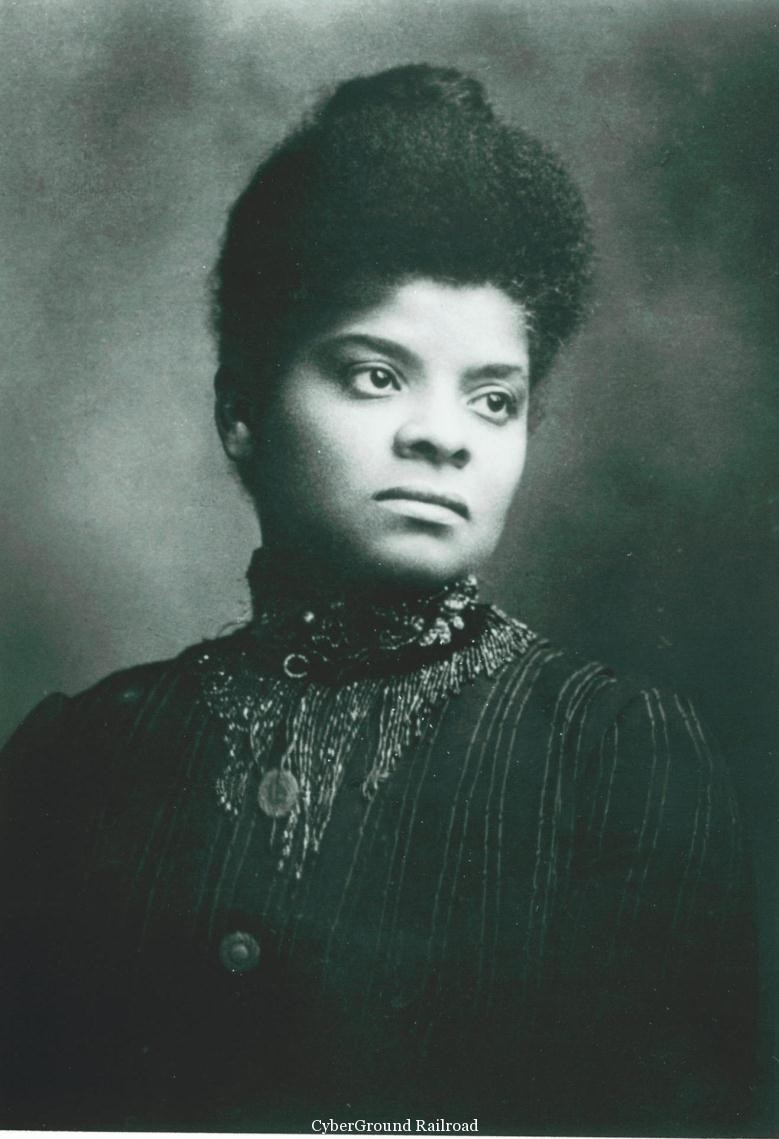
Ida B. Wells-Barnett
b.1862 – d.1931. Anti-lynching crusader, journalist, and advocate for racial justice and women’s suffrage. For Wells-Barnett, overcoming racism and halting the violent murder of black men was a central mission among her wide-ranging struggles for justice and human dignity. Born in Mississippi, she was educated at Rust University, actually a high school and industrial school. From 1884 to 1891, she taught in a rural school near Memphis and attended summer classes at Fisk University in Nashville.
A pattern of resistance to racial subordination was set early in Wells’ life. In 1887, she purchased a railroad ticket in Memphis and took a seat in the section reserved for whites. When she refused to move, she was physically thrown off the train. She successfully sued the Chesapeake and Ohio Railroad for damages. Upon appeal, however, the Supreme Court of Tennessee reversed the lower court’s ruling. (more…)
Black History, Politics
Congressional Black Caucus
Since its establishment in 1971, the Congressional Black Caucus (CBC) has been committed to using the full Constitutional power, statutory authority, and financial resources of the federal government to ensure that African Americans and other marginalized communities in the United States have the opportunity to achieve the American Dream. As part of this commitment, the CBC has fought for the past 48 years to empower these citizens and address their legislative concerns by pursuing a policy agenda that includes but is not limited to the following:
- reforming the criminal justice system and eliminating barriers to reentry;
- combatting voter suppression;
- expanding access to world-class education from pre-k through post-secondary level;
- expanding access to quality, affordable health care and eliminating racial health disparities;
- expanding access to 21st century technologies, including broadband;
- strengthening protections for workers and expanding access to full, fairly-compensated employment;
- expanding access to capital, contracts, and counseling for minority-owned businesses; and
- promoting U.S. foreign policy initiatives in Africa and other countries that are consistent with the fundamental right of human dignity.
For the 116th Congress, the CBC has a historic 55 members of the U.S. House of Representatives and the U.S. Senate, representing more than 82 million Americans, 25.3 percent of the total U.S. population, and more than 17 million African-Americans, 41 percent of the total U.S. African-American population. In addition, the CBC represents almost a fourth of the House Democratic Caucus.
The CBC is engaged at the highest levels of Congress with members who serve in House leadership. Representative James E. Clyburn (D-SC) serves as the Majority Whip in the House of Representatives, Representative Hakeem Jeffries (D-NY) serves as Chairman of the House Democratic Caucus and Representative Barbara Lee (D-CA) serves as co-chair of the House Democratic Steering and Policy Committee. In addition, five CBC members serve as chairs on full House committees, and 28 CBC members serve as chairs on House subcommittees.
While the CBC has predominately been made up of members of the Democratic Party, the founding members of the caucus envisioned a non-partisan organization. Consequently, the CBC has a long history of bipartisan collaboration and members who are both Democrat and Republican.
As founding member Rep. William L. Clay, Sr. said when the CBC was established, “Black people have no permanent friends, no permanent enemies…just permanent interests.”

Black History, Military
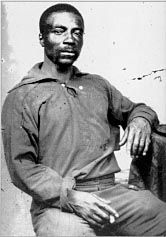
Civil War sailor George Commodore. (NARA, Records of the Veterans Administration, RG 15)
The Secretary of the Navy Authorized enlistment of slaves as Union sailors, September 25, 1861
The Union Navy began to employ African American men on board ships as crew members and sailors very early in the war. And as the war progressed, blockading squadrons and naval vessels also took on board numerous “contraband” slaves who managed to escape from land to sea.
By 1863, the Union navy was enlisting and actively recruiting runaway slaves as crewmembers or paid sailors, usually at the low rank of “landsman.” By the end of the war nearly 20,000 black sailors had enlisted, a figure which represented nearly 20 percent of the navy’s enlisted men. The majority of these black sailors were men who had been enslaved but seized naval service as a route to freedom. (more…)