Black History, Religion
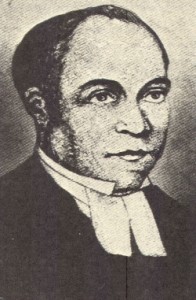
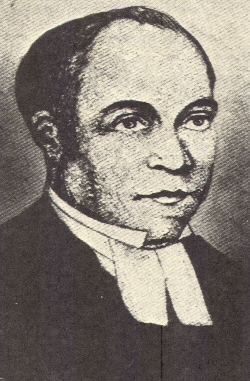
Described as a “genuine African,” Peter Williams and his parents were enslaved Africans. Williams’ enslaver, Mr. Aymar, was a tobacconist. He was also a Loyalist who left the country during the Revolutionary War. Having developed a skill, Williams went into business for himself as a tobacconist. He would eventually own a house, store, and other property–including himself. In 1783, Williams became the “property of the John Street Methodist church who bought him for forty (40) pounds.” From June 10, 1783, through October 20, 1796, Peter Williams worked off the debt and “refunded every pound the trustees had paid his master, and thus purchased himself.”
When Peter Williams led the African American members of the congregation from the church, he was leaving a church that compelled its African American members to wait to be served communion until all of the white members had been served. The realization that the church was not serving the needs of the African and African American community, and that African Americans could not be ordained as minister, were part of what motivated Williams to secede. Williams was the father of Peter Williams, Jr. (1780-1840), the first African American ordained minister in the Protestant Episcopal church. Peter Williams, Jr., became the first leader of St. Phillips African Church in 1819.
Black History, Science
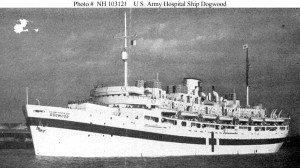
SS George Washington Carver
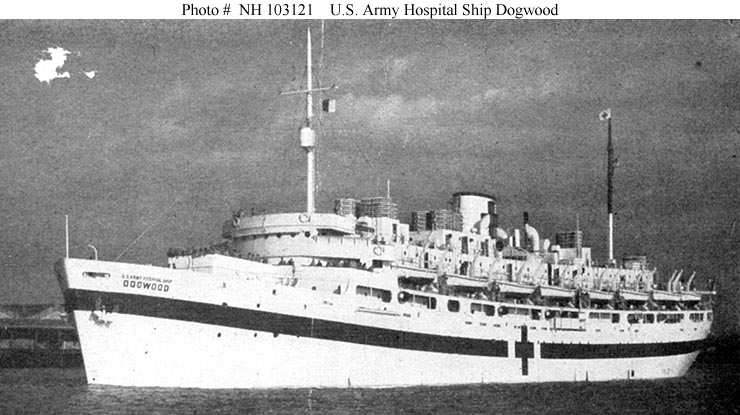
The U.S. Army Hospital Ship Dogwood (of 7933 gross tons), built in Richmond, California, entered mercantile service upon completion in May 1943 as the Liberty ship George Washington Carver. Delivered to the Army in November 1943, she was converted to a Hague Convention hospital ship in 1943-44 and renamed for a flower.
Between July 1944 and the spring of 1945, Dogwood made seven trips between the U.S. East Coast and England. Ordered to the Pacific in May 1945, she arrived in the Philippines in late June. (more…)
Black History, Education, Firsts, Religion
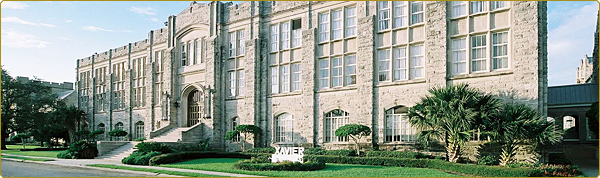
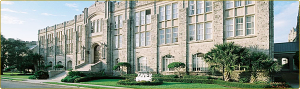 There are 102 historically Black colleges and 253 Catholic colleges in the United States, yet only one is bothBlack and Catholic. That distinction belongs to Xavier University of Louisiana, which strives to combine the best attributes of both its faith and its culture.
Located in New Orleans, the small liberal arts college dates back to 1915, when St. Katharine Drexel and theSisters of the Blessed Sacrament founded the coeducational secondary school from which it evolved. (more…)
Black History, Science
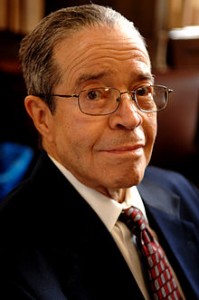
J. Ernest Wilkins Jr
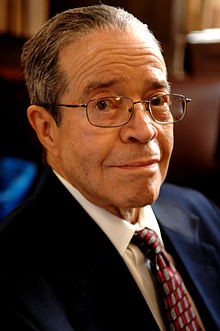
Jesse Ernest Wilkins, Jr. (November 27, 1923 – May 1, 2011) was an African American nuclear scientist and mathematician, who gained first fame on entering the University of Chicago at age 13, becoming its youngest ever student. His intelligence led to him being referred to as a “negro genius” in the media.
As part of a widely varied and notable career, Wilkins contributed to the Manhattan Project during the Second World War. He also gained fame working in and conducting nuclear physics research in both academia and industry. He wrote numerous scientific papers, served in various important posts, earned several significant awards and helped recruit minority students into the sciences.
During his studies and various careers he was not untouched by the prevalent racism that existed for much of his life.
Black History, Civil Rights
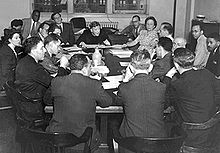 On June 25, 1941, President Roosevelt signed Executive Order 8802 creating the Fair Employment Practices Committee (FEPC). The order banned racial discrimination in any defense industry receiving federal contracts by declaring “there shall be no discrimination in the employment of workers in defense industries or government because of race, creed, color, or national origin.” The order also empowered the FEPC to investigate complaints and take action against alleged employment discrimination. (more…)
Black History, Business
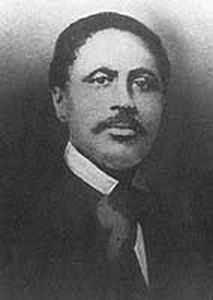
Macon Bolling Allen
Macon Bolling Allen is believed to be the first black man in the United States who was licensed to practice law. Born Allen Macon Bolling in 1816 in Indiana, he grew up a free man. Bolling learned to read and write on his on his own and eventually landed his first a job as a schoolteacher where he further refined his skills.
In the early 1840s Bolling moved from Indiana to Portland, Maine. There he changed his name to Macon Bolling Allen and became friends with local anti-slavery leader General Samuel Fessenden, who had recently began a law practice. Fessenden took on Allen as an apprentice/law clerk. By 1844 Allen had acquired enough proficiency that Fessenden introduced him to the Portland District court and stated that he thought Allen should be able to practice as a lawyer. He was refused on the grounds that he was not a citizen, though according to Maine law anyone “of good moral character� could be admitted to the bar. He then decided to apply for admission by examination. After passing the exam and earning his recommendation he was declared a citizen of Maine and given his license to practice law on July 3, 1844.
(more…)