Black History, Inventions
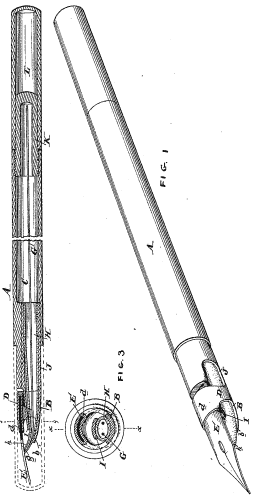
Improved Fountain Pen - patent #419,065 1/7/1890
William Purvis of Philadelphia invented and patented improvements to the fountain pen in 1890. William Purvis made several improvements to the fountain pen in order to make a “more durable, inexpensive, and better pen to carry in the pocket.”
Purvis used an elastic tube between the pen nib and the ink reservoir that used a suction action to return any excess ink to the ink reservoir, reducing ink spills and increasing the longevity of the ink. Fountain pens were first patented as early as 1809.

Bag fastener - patent #256,856 4/25/1882
William Purvis also invented several other inventions including two machines for making paper bags (which Purvis sold to the Union Paper Bag Company of New York), a bag fastener, a self-inking hand stamp, and several devices for electric railroads. His first paper bag machine (patent #293,353) created satchel bottom type bags in an improved volume and greater automation than previous machines. (more…)
Black History, Entertainment
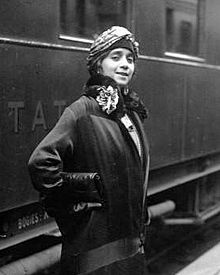
Lillian Evans Evanti
Lillian Evans Evanti (1890-1967) was the first African American to sing opera with an organized company in Europe.
In 1941 she founded the National Negro Opera.
She was born in Washington, D.C., and graduated from Armstrong Manual Training School.
She graduated from Howard University with a Bachelor’s Degree in music and studied in France and Italy. Evanti, a soprano, sang at the Belasco Theater in 1926 with Marian Anderson.
She debuted in 1927 in Delibes’s Lakmé at Nice, France. As an opera singer and concert artist, she toured throughout Europe and South America.
- In 1943, she performed with the Watergate Theater barge on the Potomac River. In 1944, she appeared at The Town Hall (New York City). She received acclaim as Violetta in Verdi’s La traviata as produced by the National Negro Opera Company in 1945.
- In 1963, she walked with her friend Alma Thomas in the March on Washington.
Abolition, Black History
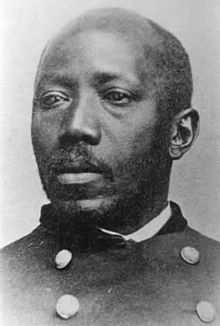
- Martin R. Delany
b. May 6, 1812, Charles Town, Va., U.S.–d. Jan. 24, 1885, Xenia, Ohio), U.S. black Abolitionist, physician, and editor in the pre-Civil War period; his espousal of black nationalism and racial pride anticipated expressions of such views a century later.
In search of quality education for their children, the Delanys moved to Pennsylvania when Martin was a child. At 19, while studying nights at a Negro church, he worked days in Pittsburgh. Embarking on a course of militant opposition to slavery, he became involved in several racial improvement groups. Under the tutelage of two sympathetic physicians he achieved competence as a doctor’s assistant as well as in dental care, working in this capacity in the South and Southwest (1839). (more…)
Black History, Medicine
 The National Medical Association (NMA) is the largest and oldest national organization representing African American physicians and their patients in the United States. The NMA is a 501 (c) (3) national professional and scientific organization representing the interests of more than 30,000 African American physicians and the patients they serve, with nearly 112 affiliated societies throughout the nation and U.S. territories. The National Medical Association has been firmly established in a leadership role in medicine.
The NMA is committed to improving the quality of health among minorities and disadvantaged people through its membership, professional development, community health education, advocacy, research and partnerships with federal and private agencies. Throughout its history the National Medical Association has focused primarily on health issues related to African Americans and medically underserved populations; however, its principles, goals, initiatives and philosophy encompass all ethnic groups. (more…)
Black History, Business, Medicine
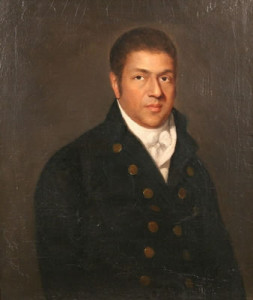
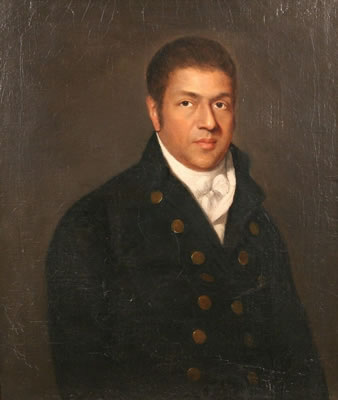
Captain Paul Cuffee
A man of great energy and resolve, Paul Cuffee was born on the tiny island of Cuttyhunk, eleven miles offshore of New Bedford, MA. He was the seventh of ten children of Kofi Slocum, a freed African slave, and Ruth Moses, a Wampanoag Indian. His father took the name Slocum out of respect for the man who had freed him, John Slocum, a Quaker whose family owned Cuttyhunk.
His mother was descended from a long line of Wampanoags who had been friendly to the early white settlers. They were a hardworking, devout couple. Quakers themselves, they raised their children to be contributing citizens. They were free and ambitious, and they prospered. (more…)